
Abdullah II of Jordan
King of Jordan since 1999, Hashemite monarch and reformer.

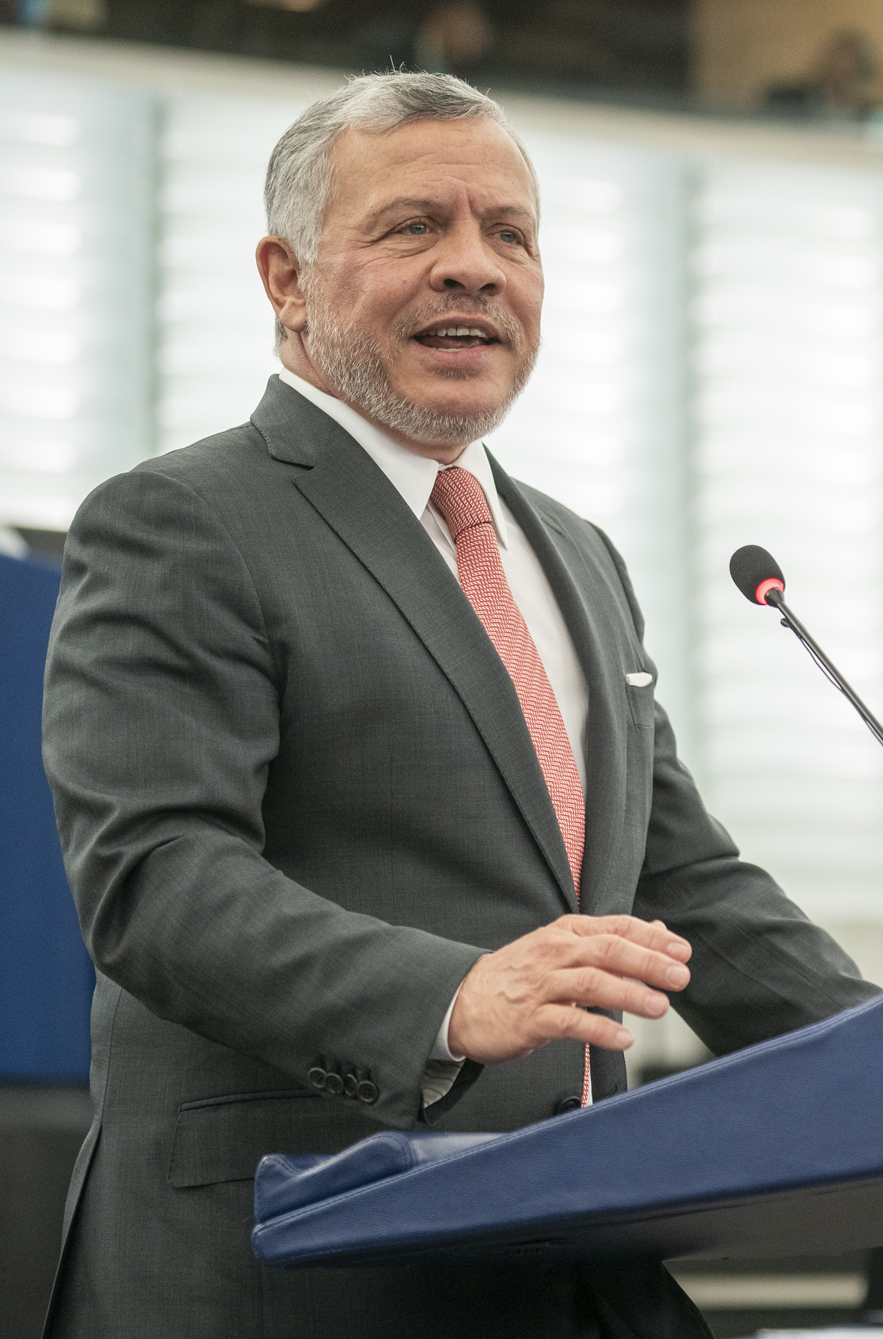
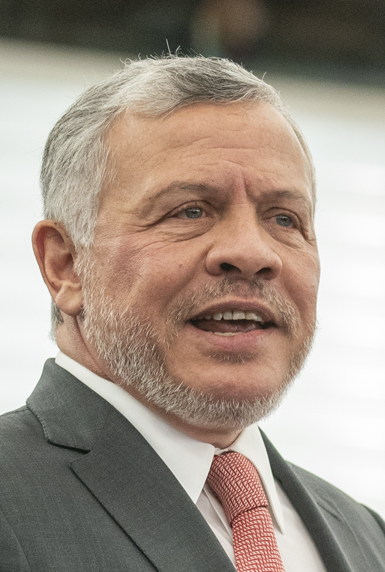
European Parliament · CC BY 4.0
Abdullah II (Abdullah bin Hussein; born 30 January 1962) became King of Jordan on 7 February 1999. He belongs to the Hashemite dynasty, which has ruled Jordan since 1921 and is traditionally considered the 41st-generation direct male-line descendant of the Islamic prophet Muhammad. He is a constitutional monarch who leads an authoritarian government, holding broad executive and legislative powers. He is recognized for encouraging interfaith dialogue and a moderate interpretation of Islam.
Abdullah was born in Amman, the first child of King Hussein and his second wife, Princess Muna (formerly Toni Avril Gardiner). He was initially the heir apparent, but in 1965 his father transferred that title to Abdullah’s uncle, Prince Hassan. He began his education in Amman, then attended schools in England and the United States, including Eaglebrook School and Deerfield Academy. He started his military career in 1980 as a training officer in the Jordanian Armed Forces, later studying at the Royal Military Academy Sandhurst and serving as a second lieutenant in the British Army. After a year at Pembroke College, Oxford, studying Middle Eastern affairs, he returned to Jordan, rising through the ranks. He commanded the 40th Brigade, took courses at Fort Knox and Georgetown University, and became a major general in 1998. In 1993, he married Rania Al-Yassin, a marketing employee at Apple; they have four children: Crown Prince Hussein, Princess Iman, Princess Salma, and Prince Hashem. Shortly before his death in 1999, King Hussein reinstated Abdullah as heir, and he succeeded his father.
Upon taking the throne, Abdullah liberalized the economy. During the 2011 Arab Spring protests, he quickly replaced the government and introduced reforms. Proportional representation was brought back for the 2016 parliamentary election, which he stated would eventually lead to a parliamentary government, though critics view these changes as superficial. Power remains concentrated with the king. These reforms occurred amid regional instability, including the arrival of 1.4 million Syrian refugees. Abdullah is the longest-serving current Arab leader and serves as custodian of Muslim and Christian religious sites in Jerusalem, a role his dynasty has held since 1924. In 2021, the Pandora Papers revealed his hidden wealth held through offshore entities.
- born
- 30 January 1962
- field
- Monarch, Head of State
- nationality
- Jordanian
- known_for
- Longest-serving current Arab leader; custodian of Muslim and Christian religious sites in Jerusalem; liberalized economy; responded to 2011 protests with reforms
Lore & Background
Abdullah was born in Amman as the first child of King Hussein and his wife, Princess Muna. He was heir apparent until his father transferred the title to Abdullah's uncle Prince Hassan in 1965. He began his military career in 1980 as a training officer in the Jordanian Armed Forces, later assuming command of the country's Special Forces in 1994, eventually becoming a major general in 1998. In 1993, he married Rania Al-Yassin, with whom he has four children: Crown Prince Hussein, Princess Iman, Princess Salma and Prince Hashem. A few weeks before his death in 1999, King Hussein named Abdullah his heir, and Abdullah succeeded his father.
Abdullah liberalized the economy when he assumed the throne. In 2011, large-scale protests demanding reform erupted in the Arab world, which led to civil wars in some countries. Abdullah responded quickly to domestic unrest by replacing the government and introducing reforms. Proportional representation was reintroduced to the Jordanian parliament for the 2016 election, a move which he said would eventually lead to establishing a parliamentary government, but government critics remain skeptical, viewing the reforms as cosmetic changes. Power remains centralized in the king's hands. The reforms took place amid unprecedented challenges stemming from regional instability, including an influx of 1.4 million Syrian refugees.
Reader's Guide
Abdullah II's significance lies in his role as a stabilizing monarch in a volatile region, balancing traditional Hashemite authority with gradual political and economic reforms. His swift response to the 2011 Arab Spring protests—replacing the government and reintroducing proportional representation—demonstrated his ability to manage domestic unrest without descending into civil war, unlike some neighboring countries. However, critics view his reforms as cosmetic, as power remains centralized in his hands. His tenure has been marked by the immense challenge of hosting 1.4 million Syrian refugees, straining Jordan's resources. As custodian of Muslim and Christian religious sites in Jerusalem, a position held by his dynasty since 1924, he holds significant religious authority. The 2021 Pandora Papers revealed his hidden wealth through offshore entities, adding a layer of controversy to his legacy. As the longest-serving current Arab leader, Abdullah continues to navigate Jordan's path between authoritarian governance and incremental reform.
Did You Know?
- Abdullah is the namesake of his paternal great-grandfather, Abdullah I, who founded modern Jordan.
- He attended high school at Deerfield Academy in the United States and was the commencement speaker at its class of 2000 graduation.
- He met his wife Rania Al-Yassin at a dinner organized by his sister Princess Aisha in January 1993; they became engaged two months later.
- The 2021 Pandora Papers revealed Abdullah's hidden wealth through offshore entities.
A Decade in the Trenches Before the Throne
Abdullah's military path stretched well over a decade before he ever inherited a crown. He entered the Royal Military Academy Sandhurst in 1980 while simultaneously serving as a training officer in the Jordanian Armed Forces. Commissioned as a second lieutenant in the British Army, he spent a year with the 13th/18th Royal Hussars across Britain and West Germany. A special-studies year in Middle Eastern affairs at Pembroke College, Oxford, followed in 1982. Returning to Jordan, he climbed through the Royal Jordanian Army as first lieutenant, platoon commander, and assistant company commander in the 40th Armored Brigade. He completed a free-fall parachuting course and the Armored Officer's Advanced Course at Fort Knox in 1985, then commanded a tank company in the 91st Armored Brigade. Training to fly Cobra attack helicopters with the Royal Jordanian Air Force and advanced study at Georgetown's Walsh School of Foreign Service in 1987 rounded out his preparation. By 1993 he held the rank of colonel and commanded the 40th Brigade. In 1994 he took command of Jordan's Special Forces as a brigadier general, restructuring them into the Joint Special Operations Command two years later. He reached major general in 1998, completed a defence-resources course at the American Naval Postgraduate School, and led an elite manhunt whose success saw his name chanted in the streets of Amman.
Constitutional Monarch in a Turbulent Region
Abdullah ascended to the Jordanian throne on 7 February 1999, just weeks after his father King Hussein named him heir. As a constitutional monarch he heads what is described as an authoritarian regime wielding wide executive and legislative powers. One of his earliest moves was liberalizing the national economy. When the 2011 wave of Arab-world protests reached Jordan's borders, he reacted swiftly, replacing the government and introducing a package of reforms. Proportional representation was restored to the parliamentary system ahead of the 2016 election, a step he framed as a pathway toward a fully parliamentary government. Critics, however, have largely dismissed these changes as cosmetic, noting that real power remains concentrated in the king's hands. His tenure has also been shaped by extraordinary external pressures, most notably the arrival of 1.4 million Syrian refugees fleeing the civil war. Despite these challenges, he has maintained his position as the longest-serving current Arab leader.
Bloodline, Upbringing, and the Apple Office
Abdullah was born on 30 January 1962 at Palestine Hospital in Amman, the first child of King Hussein and his British-born second wife, Princess Muna. He carries the name of his paternal great-grandfather, Abdullah I, founder of modern Jordan. The Hashemite dynasty, which ruled Mecca for over seven centuries before the House of Saud's 1925 conquest, has held the Jordanian throne since 1921 and is considered the oldest ruling dynasty in the Muslim world. Family tradition traces Abdullah as the 41st-generation agnatic descendant of the Prophet Muhammad's daughter Fatimah and Ali, the fourth Rashidun caliph. As the king's eldest son he was heir apparent under the 1952 constitution, though political instability prompted Hussein to transfer the title to Abdullah's uncle, Prince Hassan, in 1965. His schooling carried him from the Islamic Educational College in Amman to St Edmund's in England, then Eaglebrook School and Deerfield Academy in the United States. In January 1993, at a dinner hosted by his sister Princess Aisha, he met Rania Al-Yassin, a marketing employee at Apple's Amman office. They were engaged two months later and married in June. Their four children are Crown Prince Hussein, Princess Iman, Princess Salma, and Prince Hashem.
Jerusalem's Custodian and the Pandora Papers
Abdullah has built a significant portion of his public identity around promoting interfaith dialogue and what he describes as a moderate understanding of Islam. A central pillar of that identity is his role as custodian of the Muslim and Christian holy sites in Jerusalem, a position the Hashemite dynasty has held since 1924. As the longest-serving current Arab leader, he has used this custodianship to position Jordan as a bridge between faiths and a stabilizing voice in a region frequently torn by sectarian conflict. Yet his legacy is not without shadow. In 2021, the Pandora Papers investigation exposed a network of offshore entities through which Abdullah had accumulated hidden wealth, a revelation that complicated the image of a reform-minded, transparent monarch. The contrast between his public advocacy for moderation and dialogue and the private opacity of his financial holdings has drawn scrutiny from both domestic critics and international observers, adding a layer of complexity to a reign already marked by the tension between centralized royal authority and the promises of political reform.
Gallery
More in Royalty And Heads Of State 1-24
Elsewhere in the Royalty And Heads Of State universe
Spotted an error? Know more?
This is a living reference — every entry is fact-audited, and reader corrections feed straight into our audit queue. Suggest an edit · See this site's audit record