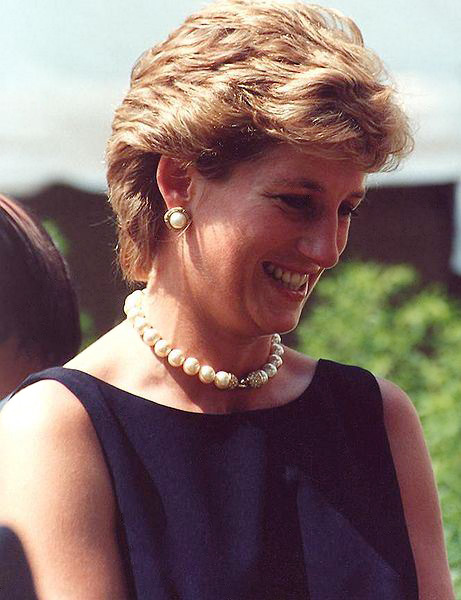
Diana, Princess of Wales
Princess of Wales, activist, and style icon.

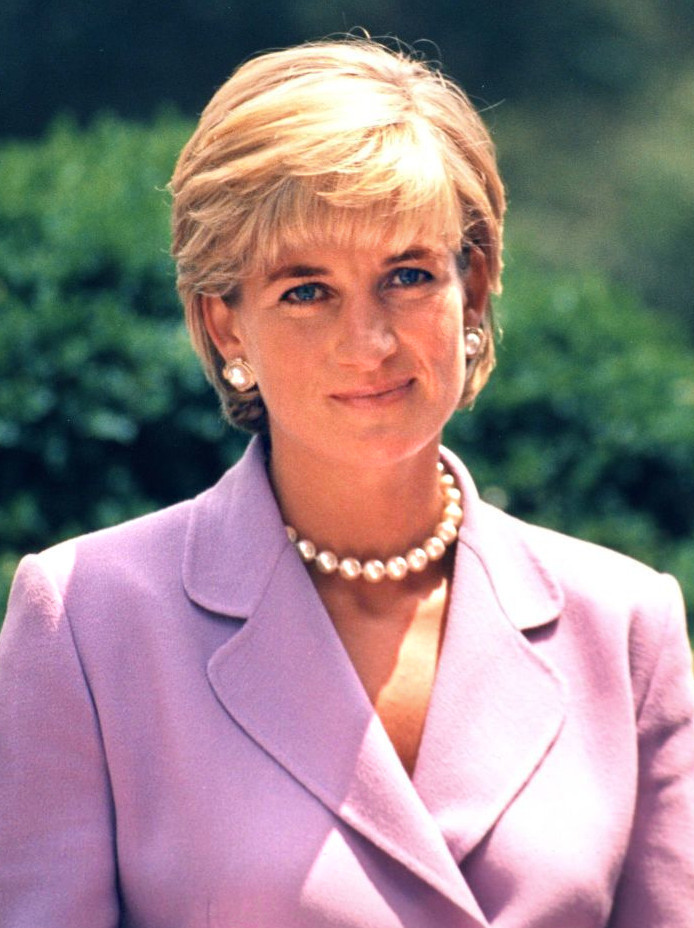
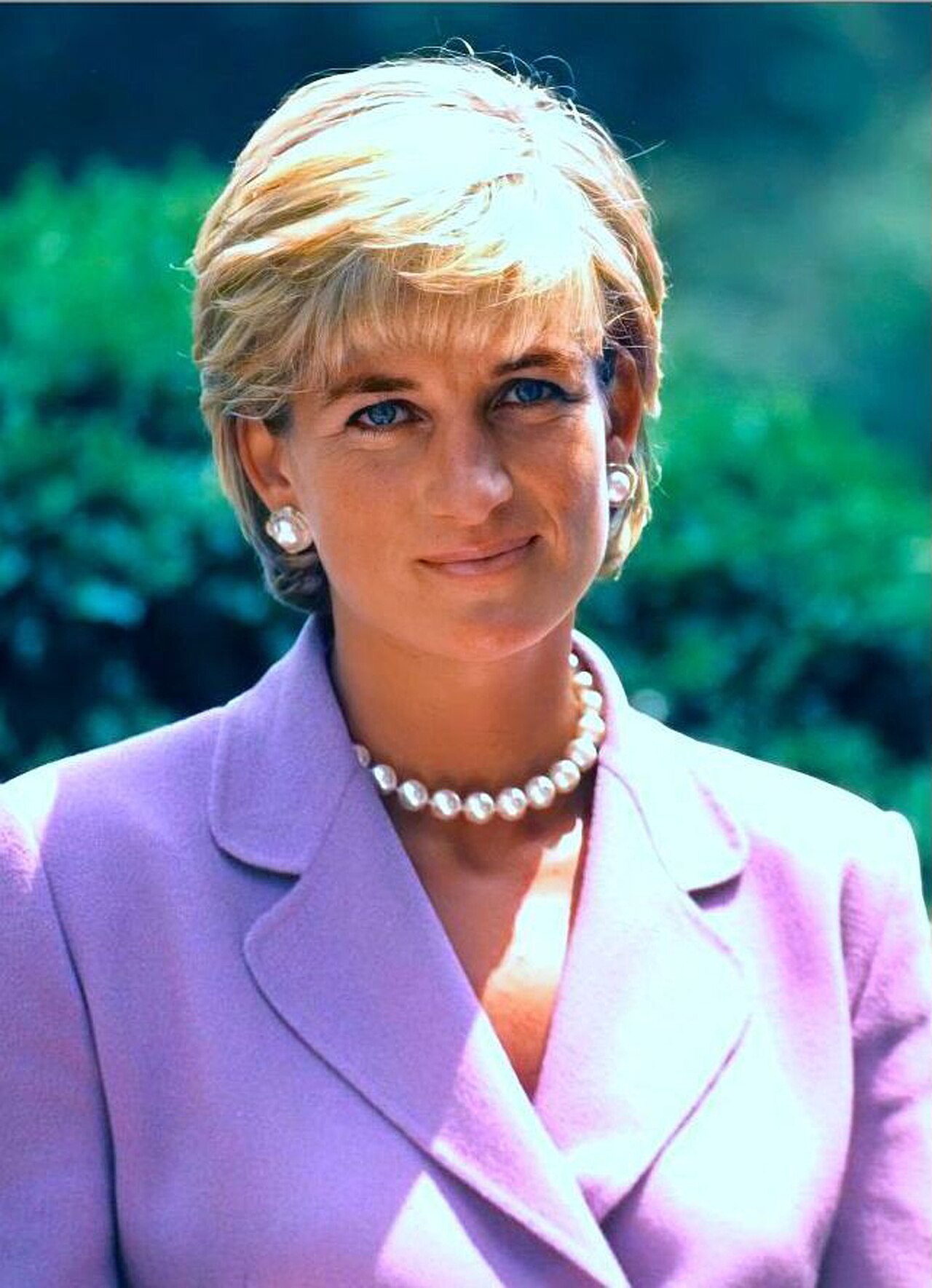
John Mathew Smith & www.celebrity-photos.com from Laurel Maryland, USA · CC BY-SA 2.0
Diana Frances Spencer was born on 1 July 1961 at Park House, a property on the Sandringham estate in Norfolk. She was the fourth of five children born to John Spencer, Viscount Althorp, and Frances Spencer. The Spencer family had longstanding ties to the monarchy; both of her grandmothers had served as ladies-in-waiting to the Queen Mother. Her parents had hoped for a son to inherit the family title, and it took a week before they settled on her name, Diana Frances. Within the family, she was nicknamed "Duch" for her serious, duchess-like manner as a child.
Her early years were marked by family strain. A younger brother, John, died shortly after birth a year before she was born. The pressure to produce a male heir contributed to her parents' divorce when Diana was seven. Her mother later remarried, and custody of Diana was awarded to her father, with support from her maternal grandmother. In 1976, her father married Raine, Countess of Dartmouth, a stepmother Diana resented and once pushed down the stairs. She later described her childhood as "very unhappy" and "unstable." After her father inherited the title Earl Spencer in 1975, the family moved from Park House to Althorp in Northamptonshire, and she became known as Lady Diana.
Educated at home by a governess, she later attended Silfield Private School, Riddlesworth Hall, and West Heath Girls' School. She failed her O-levels twice but received a school award for community spirit. She left school at 16. She was a skilled pianist, a strong swimmer and diver, and studied ballet and tap dance. In the mid-1970s, she began voluntary work.
In 1981, while working as a nursery teacher's assistant, she became engaged to Charles, Prince of Wales, the eldest son of Queen Elizabeth II. They married at St Paul's Cathedral in July 1981, and she became Princess of Wales, a role the public embraced enthusiastically. The couple had two sons: William in 1982 and Harry in 1984. Their marriage suffered due to incompatibility and extramarital affairs. They separated in 1992 after the breakdown became public, and divorced in 1996.
As Princess of Wales, she carried out royal duties for the Queen across the Commonwealth. She was celebrated for her beauty, style, and charm, and later for her unconventional charity work. Her early patronages focused on children and the elderly, but she became known for two major campaigns: changi
- born
- 1 July 1961
- died
- 31 August 1997
- field
- Royalty, activism
- nationality
- British
- known_for
- Charity work, fashion icon, marriage to Prince Charles
Lore & Background
Diana was born into the British nobility and grew up close to the royal family, living at Park House on their Sandringham estate. In 1981, while working as a nursery teacher's assistant, she became engaged to Charles, the eldest son of Queen Elizabeth II. Their wedding took place at St Paul's Cathedral in July 1981 and made her Princess of Wales. The couple had two sons, William in 1982 and Harry in 1984. Diana's marriage to Charles suffered due to their incompatibility and extramarital affairs; they separated in 1992 and divorced in 1996.
As Princess of Wales, Diana undertook royal duties on behalf of the Queen and represented her at functions across the Commonwealth realms. She was celebrated for her beauty, style, charm, and unconventional approach to charity work. Her patronages initially centered on children and the elderly, but she became known for campaigns on AIDS acceptance and the international removal of landmines, promoted through the International Red Cross. She also raised awareness for cancer and mental illness. Diana died after a car crash in Paris in August 1997; an inquest returned a verdict of unlawful killing due to gross negligence by a driver and the paparazzi.
Reader's Guide
Diana's significance lies in her transformation of the role of a modern royal, using her public platform to address stigmatized issues such as AIDS and landmines. Her personal struggles, including the public collapse of her marriage, were widely publicized, yet her charisma and friendliness helped her reputation survive. Her legacy has had a significant impact on the royal family and British society, influencing how the monarchy engages with charitable causes and the media. Her death prompted extensive public mourning and global media attention, and the subsequent investigation highlighted issues of media intrusion. Diana remains an enduring figure in popular culture, remembered for her activism, style, and humanitarian work.
Did You Know?
- Diana was the first Englishwoman to marry the first in line to the throne since Anne Hyde married James, Duke of York and Albany, over 300 years earlier.
- She was the first royal bride to have a paying job before her engagement.
- Diana's engagement ring was selected by herself.
- She was initially noted for her shyness but her charisma and friendliness endeared her to the public.
The Procession Through London
The funeral cortège departed Kensington Palace at 9:08 am on 6 September 1997, its departure announced by the tolling of Westminster Abbey's tenor bell. Diana's coffin, draped in the royal standard bearing an ermine border, was borne on a gun carriage by riders of the King's Troop, with mounted police escorting the route along Hyde Park. Eight members of the Welsh Guards flanked the procession during its one-hour-forty-seven-minute passage through the capital. The lead-lined casket weighed a quarter of a tonne; atop it rested three white flower wreaths from her brother and two sons, alongside a handwritten note from Prince Harry addressed simply to "Mummy." More than a million Londoners packed the streets, and flowers rained down on the cortege as it passed. At Buckingham Palace, Queen Elizabeth II lowered her head in the passing of the coffin. Two large screens had been erected in Hyde Park so that those unable to secure a seat inside the abbey could follow the service live.
The Westminster Abbey Service
The official ceremony opened at 11:00 BST and lasted one hour and ten minutes, led by the Archbishop of Canterbury and the Dean of Westminster. The Choir of Westminster Abbey sang under the direction of Martin Neary, with Martin Baker at the organ. The musical programme interwove sacred and secular works: Bach's Ich ruf zu dir, Pachelbel's Canon (mistakenly identified by the commentator as Albinoni's Adagio), Handel's Nimrod, and compositions by Purcell and Croft. Prime Minister Tony Blair read from First Corinthians, chapter thirteen, concluding with the line "the greatest of these is love." The assembled guests included four living former prime ministers, Sir Cliff Richard, Elton John, Richard Branson, Tom Hanks, Steven Spielberg, Mariah Carey, Luciano Pavarotti, Tom Cruise, Nicole Kidman, Nelson Mandela, Hillary Clinton, Henry Kissinger, Bernadette Chirac, Queen Noor of Jordan, and the King of Spain. Five hundred representatives of charities Diana had championed walked in the cortège behind the royal family.
A Global Audience
The funeral became one of the most-watched televised events in recorded history. In the United Kingdom, an average of 32.10 million viewers tuned in, placing it among the nation's highest-ever television figures. Worldwide, an estimated two to two and a half billion people watched the proceedings, a staggering reach for a single ceremony. The scale of public mourning was visible in the streets: over a million Londoners packed the route, and the Union Flag at Kensington Palace was lowered to half mast. The event was not a state funeral but a royal ceremonial one, built on the framework of Operation Tay Bridge, a plan rehearsed for twenty-two years for the Queen Mother. Yet its emotional weight transcended protocol. The sheer volume of flowers at the gates of Kensington and Buckingham Palaces, the spontaneous tributes from bystanders, and the global broadcast turned a private family loss into a shared human moment witnessed by billions across every continent.
The Boys Behind the Coffin
The decision to have Prince William and Prince Harry walk behind their mother's coffin was deeply contested. Prince Philip initially opposed the idea, only relenting with the words "I'll walk if you walk." In his 2023 memoir Spare, Harry wrote that several adults found the arrangement horrifying; his uncle Lord Spencer called it "a barbarity" and later claimed he had been misled about the boys' wishes. Harry also recalled suggestions that William should walk alone, which he refused to accept, arguing the roles would have been reversed had the situation been different. Security concerns compounded the difficulty: Alastair Campbell's diaries revealed that the government and royal household feared for Charles's safety in the crowd, so the Prince of Wales was kept close to his sons. William later called the experience "one of the hardest things I've ever done," while Harry stated no child "should be asked to do" what they did. Yet both ultimately saw it as necessary—William framing it as a balance between duty and family, Harry saying he was very glad he had taken part.
Gallery
More in Royalty And Heads Of State 1-24
Elsewhere in the Royalty And Heads Of State universe
Spotted an error? Know more?
This is a living reference — every entry is fact-audited, and reader corrections feed straight into our audit queue. Suggest an edit · See this site's audit record