Edward VII
King of the United Kingdom and Emperor of India from 1901 to 1910.

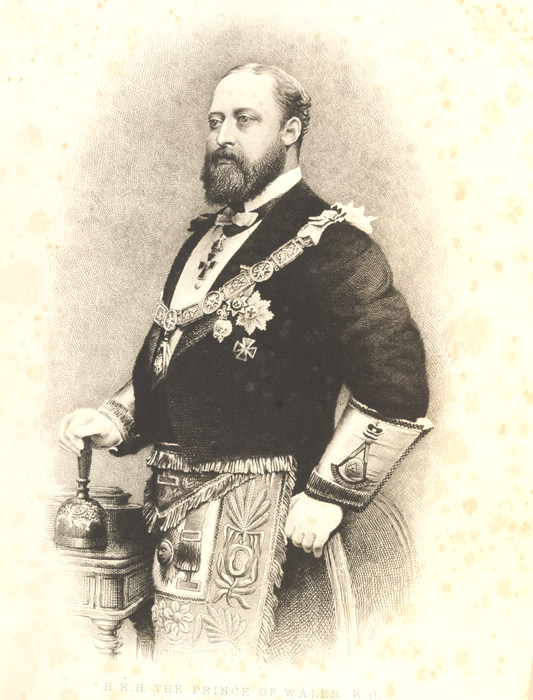
Author (artist) unknown (work was published in 1888) · Public domain
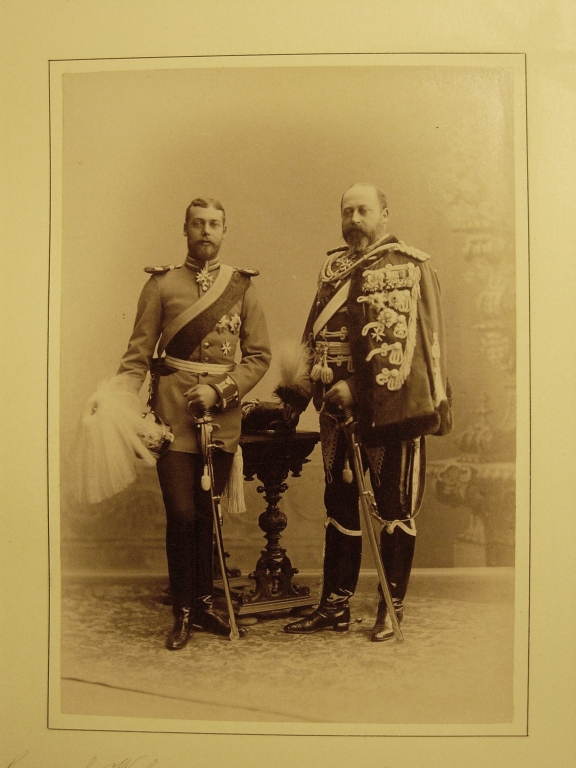
Edward VII (Albert Edward; 9 November 1841 – 6 May 1910) was King of the United Kingdom and the British Dominions, and Emperor of India, from 22 January 1901 until his death in 1910. The second child and eldest son of Queen Victoria and Prince Albert of Saxe-Coburg and Gotha, he was Prince of Wales and heir apparent for almost 60 years. His reign, known as the Edwardian era, coincided with the start of a new century and significant technological and social changes.
- born
- 9 November 1841
- died
- 6 May 1910
- field
- Monarchy
- nationality
- British
- known_for
- Reign as King of the United Kingdom and Emperor of India; strengthening the popularity of the British monarchy; fostering good relations with France
Lore & Background
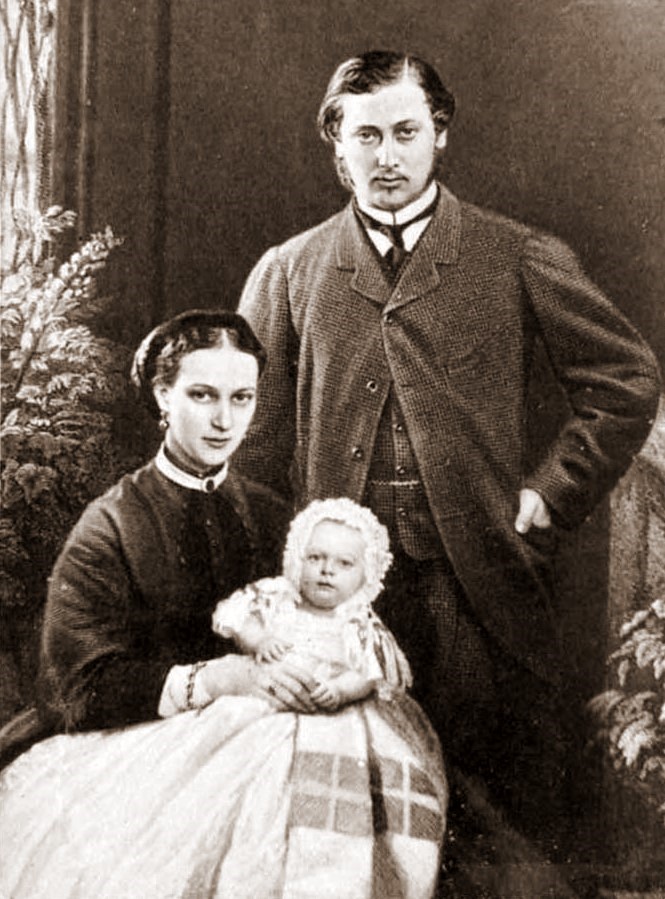
Edward, nicknamed 'Bertie', was born at Buckingham Palace on 9 November 1841. He undertook a rigorous educational programme devised by his father, but did not excel in his studies. His true talents were charm, sociability, and tact. In 1860, he toured North America, inaugurating the Victoria Bridge in Montreal and laying the cornerstone of Parliament Hill in Ottawa. The tour boosted his confidence and had diplomatic benefits. He married Princess Alexandra of Denmark in 1863; the couple had six children. As Prince of Wales, he gained a reputation as a playboy, with at least fifty-five liaisons conjectured, including with actress Lillie Langtry and Alice Keppel. His mother blamed him for his father's death and regarded him with distaste.
Reader's Guide
Edward VII inherited the throne on his mother's death in 1901 and proved an effective constitutional monarch. He played a role in modernising the British Home Fleet and reorganising the British Army after the Second Boer War. He re-instituted traditional ceremonies and broadened the range of people with whom royalty socialised. His fostering of good relations with France earned him the popular nickname 'Peacemaker', though his relationship with his nephew, German Emperor Wilhelm II, was poor. The Edwardian era, named after him, heralded changes such as steam turbine propulsion and the rise of socialism. He died in the midst of a constitutional crisis resolved by the Parliament Act 1911, which restricted the power of the unelected House of Lords. His only surviving son, George V, succeeded him.
Did You Know?
- Edward was known as 'Bertie' to the royal family throughout his life.
- He toured North America in 1860 and the Indian subcontinent in 1875, both popular successes.
- He was popularly called 'Peacemaker' for fostering good relations between Britain and other European countries, especially France.
- At least fifty-five liaisons are conjectured during his married life.
The Final Hours and Death
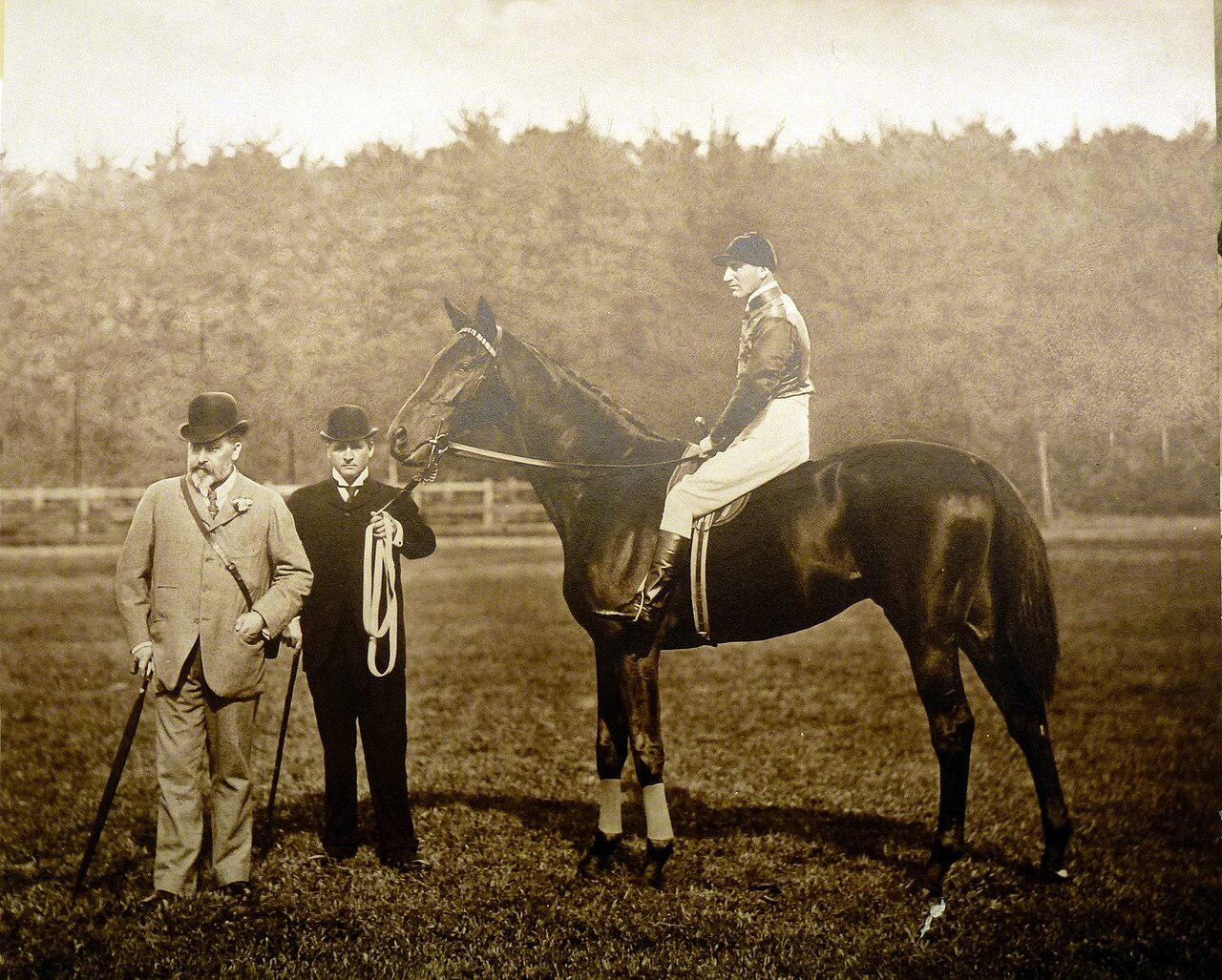
Edward VII's last days began with a return to Buckingham Palace from France on 27 April 1910, already weakened by severe bronchitis. His wife Queen Alexandra was still abroad, visiting her brother King George I in Corfu, and did not come back until 5 May. The following day proved fatal. Edward suffered multiple heart attacks yet stubbornly refused to lie down, declaring he would not surrender and would keep working until the very end. Between episodes of faintness, his son the Prince of Wales — who would soon become George V — tried to lift his spirits by mentioning that the King's horse, Witch of the Air, had won at Kempton Park that afternoon. Edward responded that he was glad to hear it. Those were his last words. At 11:30 p.m. he lapsed into unconsciousness, was carried to bed, and died fifteen minutes later. In the days that followed, Alexandra would not permit his body to be moved for a full eight days, though she did allow small groups of visitors to enter the room where he lay.
Lying in State at Westminster Hall
On 11 May, Edward's body was dressed in his military uniform and placed in a massive oak coffin. Four days later the coffin was moved to the throne room, where it was sealed for a private lying in state. On 17 May the coffin was carried in procession to Westminster Hall for a public lying in state, a first for a royal family member, a practice inspired by the 1898 lying in state of William Gladstone. Upon the coffin's arrival, a brief service took place in which the combined choirs of Westminster Abbey and the Chapel Royal sang "Praise, my soul, the King of heaven" at Queen Mary's request, though their voices were overwhelmed by the accompanying military band. The public response was enormous. On the first day, thousands queued patiently in the rain, and some 25,000 people were turned away when the gates closed at 10 p.m. On 19 May, Emperor Wilhelm II of Germany wished to have the hall closed while he laid a wreath, but police warned of potential disorder, so the emperor was admitted through a separate entrance while the public continued filing past. An estimated half a million people visited over the three days.
The State Funeral Procession
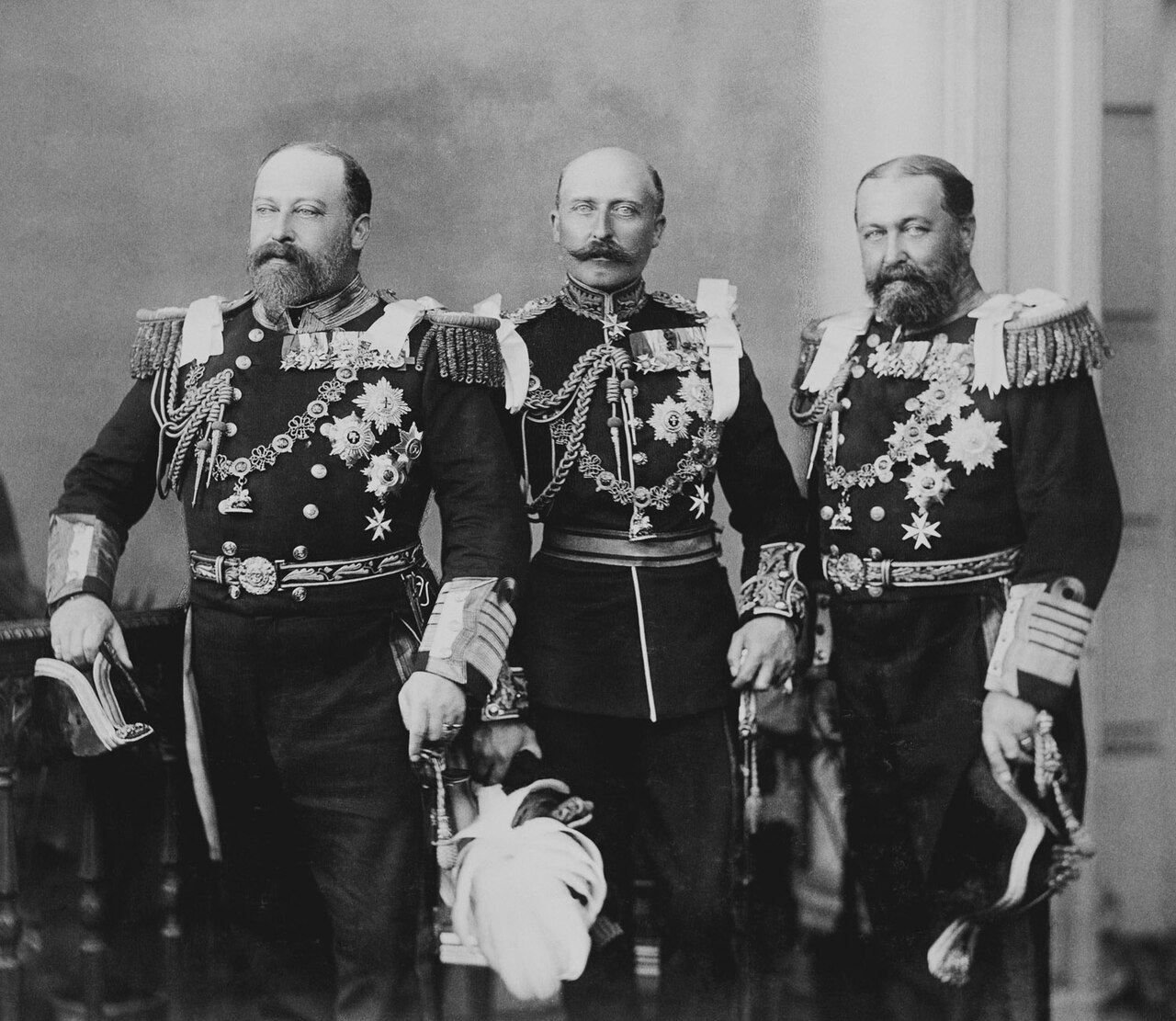
The state funeral on 20 May 1910 became the largest gathering of European royalty in history. Nine kings rode in scarlet, blue, green, and purple uniforms with plumed helmets and jeweled orders, followed by five heirs apparent, forty more imperial or royal highnesses, and seven queens — four dowager and three regnant. Together with special ambassadors from uncrowned nations, they represented seventy states in what would be the last such assemblage before the First World War deposed many of these royal houses. Crowds estimated at three to five million lined the route, which was flanked by 35,000 soldiers. The procession moved from Buckingham Palace to Westminster Hall, where Archbishop Randall Davidson conducted a small ceremony for the official mourners — Queen Alexandra, King George V, Princess Victoria, the Duke of Connaught, and the German Emperor — while thousands of others waited outside. Big Ben was rung 68 times, one for each year of Edward's life, a first for a monarch's funeral. The cortege then wound through Whitehall, the Mall, and Marble Arch to Paddington Station, where a funeral train carried the mourners to Windsor. Edward's dog Caesar led the procession, with a highlander walking behind the coffin carriage.
The Windsor Service and Musical Choices
At St George's Chapel, Windsor, the full funeral ceremony followed the format used for Queen Victoria, with one significant difference: Edward was interred within the chapel itself, whereas Victoria had been buried at the Royal Mausoleum at Frogmore. The liturgy drew closely on the Order for The Burial of the Dead from the Book of Common Prayer. Queen Alexandra had specifically requested an anthem by Sir Arthur Sullivan, "Brother, thou art gone before us," but Archbishop Davidson and other senior clerics judged the piece lacked sufficient gravitas. Alexandra was persuaded to accept instead "His Body Is Buried In Peace," the chorus from Handel's Funeral Anthem For Queen Caroline. She also requested two hymns to be sung by the congregation — "My God, my Father, while I stray" and "Now the labourer's task is o'er" — an innovation at royal state funerals. The funeral train from Paddington was hauled by the GWR 4000 Class locomotive named King Edward, pulling the Royal Train together with the funeral car originally built for Queen Victoria. The family business of William Banti served as the funeral directors to the Royal Household for the occasion.
Gallery
More in Royalty And Heads Of State 1-24
Elsewhere in the Royalty And Heads Of State universe
Spotted an error? Know more?
This is a living reference — every entry is fact-audited, and reader corrections feed straight into our audit queue. Suggest an edit · See this site's audit record