
Akhenaten
Ancient Egyptian pharaoh who introduced the worship of the Aten.

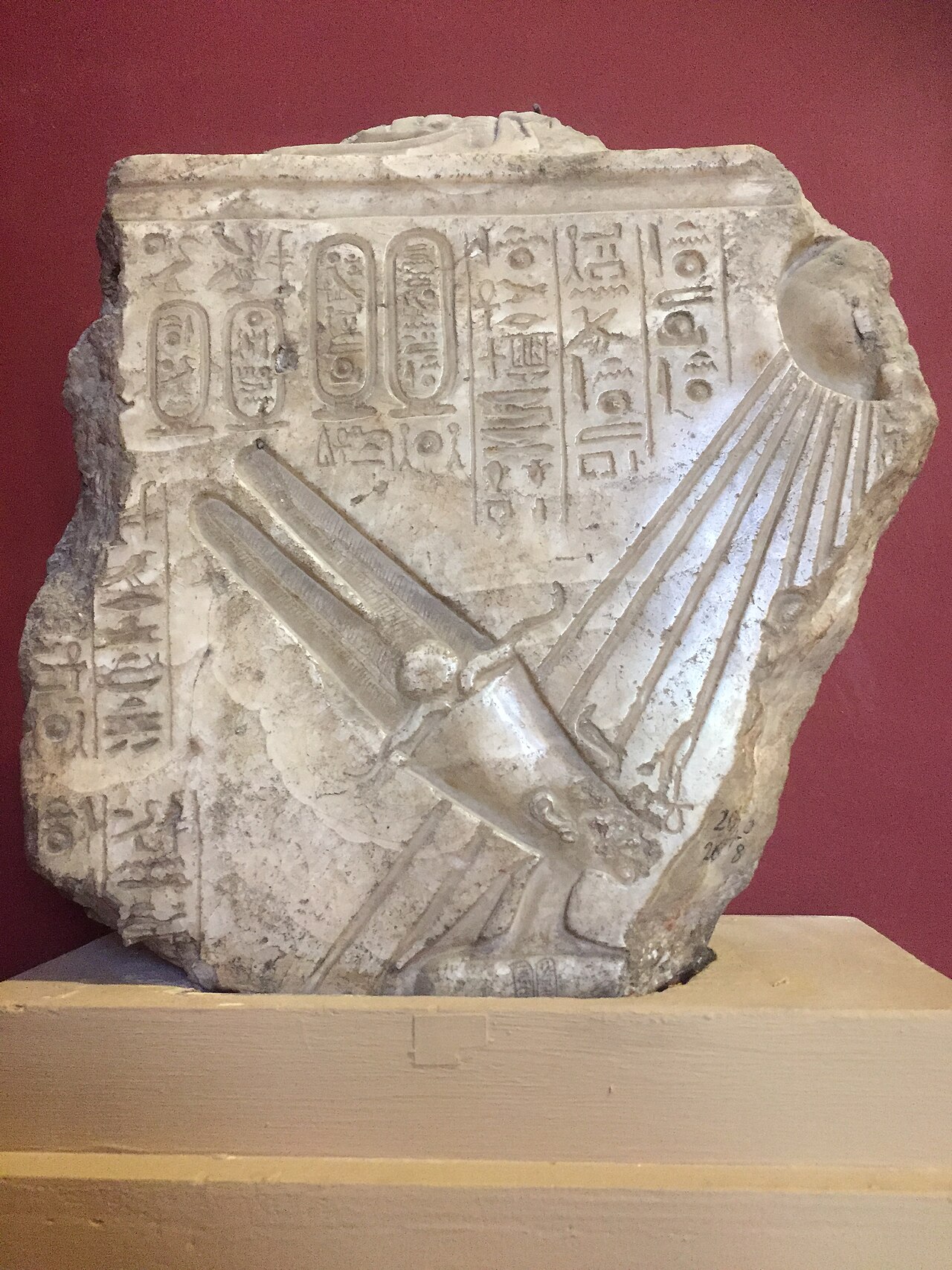
The wub · CC BY-SA 4.0
Akhenaten, also spelled Akhenaton, Echnaton, and Khuenaten, was an ancient Egyptian pharaoh of the Eighteenth Dynasty, reigning c. 1353–1336 or 1351–1334 BC. He is noted for abandoning traditional polytheistic religion and introducing Atenism, a cult centered on the Aten, which some scholars consider a precursor to monotheism. His reign and religious reforms were later reversed, and his monuments were dismantled, leading to his near-erasure from history until the late 19th-century discovery of his capital, Akhetaten.
- Born
- c. 1363–1361 BC (estimated)
- Died
- c. 1336 or 1334 BC
- Field
- Pharaoh, religious reformer
- Nationality
- Ancient Egyptian
- Known for
- Introducing Atenism, building the city of Akhetaten, and being the father of Tutankhamun
Lore & Background
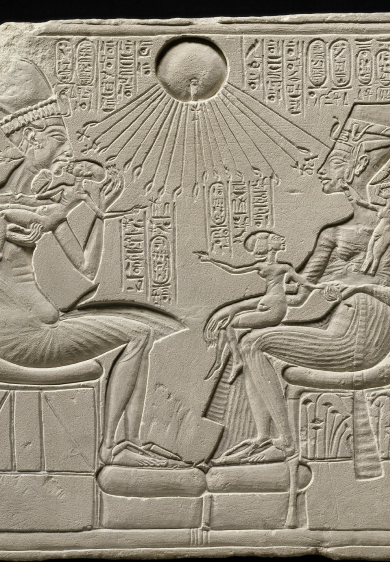
Akhenaten was born Amenhotep, a younger son of Pharaoh Amenhotep III and his principal wife Tiye. He had an elder brother, Crown Prince Thutmose, whose early death made Akhenaten heir to the throne. He married Nefertiti as his Great Royal Wife, and also had a secondary wife named Kiya, who some Egyptologists theorize was the mother of Tutankhamun. Akhenaten fathered seven attested daughters, six by Nefertiti and one by Kiya. The identity of Tutankhamun's parents is debated, with genetic testing suggesting Akhenaten and a full sister, though alternative interpretations propose other parentage.
Reader's Guide
Akhenaten's significance lies in his radical religious shift from polytheism to Atenism, which some view as an early form of monotheism. His new capital, Akhetaten (modern Amarna), was built for the worship of the Aten. After his death, traditional religion was restored, his monuments were dismantled, and his name was excluded from later king lists. Rediscovered in the late 19th century, Akhenaten has fascinated scholars and the public due to his connection with Tutankhamun, the unique art style of his reign, and his religious experiment. Debates continue over whether his policy was truly monotheistic, and the identification of his mummy from KV55 remains contested. His legacy is that of a revolutionary but controversial figure, often described as enigmatic, heretical, or the first individual in history.
Did You Know?
- Akhenaten changed his name from Amenhotep IV in the fifth year of his reign.
- His mummy, possibly found in KV55, has been genetically linked as Tutankhamun's father, but the identification as Akhenaten is questioned.
- Akhenaten's monuments were dismantled and his statues destroyed after his death.
- He had seven attested daughters, six by Nefertiti and one by Kiya.
The Religious Upheaval
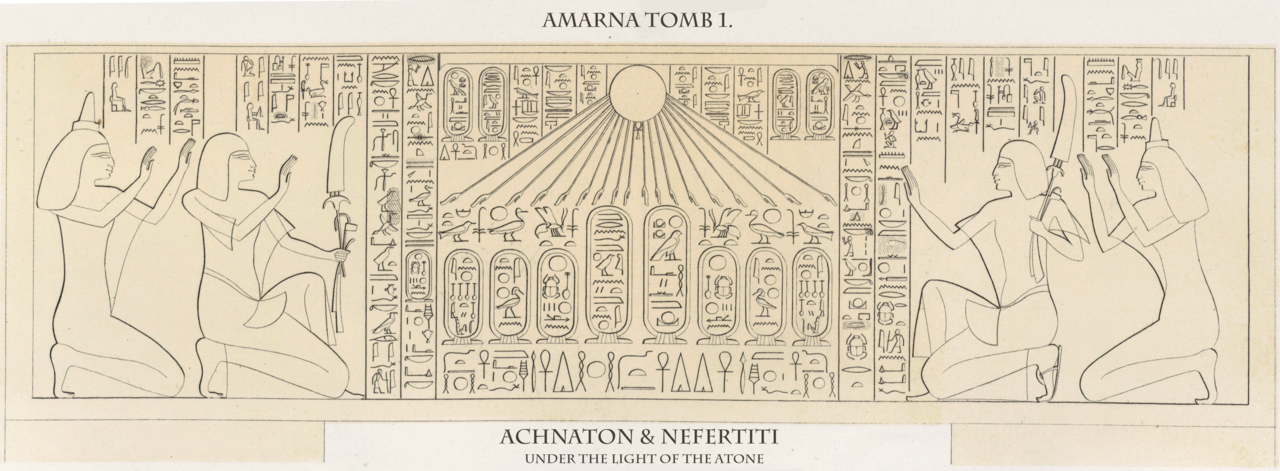
Akhenaten's most consequential act was dismantling the polytheistic religious framework that had defined Egyptian civilization for centuries. In the fifth year of his reign, he changed his name from Amenhotep IV—meaning 'Amun is satisfied'—to Akhenaten, meaning 'Effective for the Aten,' signaling a complete reorientation of his identity around a single solar deity. The worship he established, known as Atenism, centered all devotion on the Aten, though Egyptologists remain divided on its precise theological character. Some scholars classify it as absolute monotheism, while others argue it was better described as monolatry, syncretism, or henotheism. Whatever its exact doctrinal boundaries, the shift was radical enough that it triggered a violent backlash after his death. His monuments were torn down and concealed, his statues smashed, and his name struck from the official king lists. His close successor Tutankhamun even abandoned the theophoric element 'haten' in his own name, and later rulers who founded a new dynasty branded Akhenaten 'the enemy of Akhetaten' and 'that criminal' in their archival records.
A Royal Household in Flux
Born Amenhotep, the younger son of Amenhotep III and his principal wife Tiye, Akhenaten inherited the throne only after his elder brother Thutmose died, likely around the thirtieth year of his father's reign. He married Nefertiti, his Great Royal Wife, though the precise timing remains uncertain; inscriptions from his building projects suggest the union occurred either just before or shortly after his accession, with one Egyptologist placing it in his fourth regnal year. A secondary wife named Kiya also appears in the record, and some scholars theorize she was the mother of Tutankhamun. Akhenaten fathered seven attested daughters, six of them by Nefertiti, including Meritaten, Meketaten, and Ankhesenpaaten. The question of a male heir haunts his legacy: genetic testing links Tutankhamun to a male in tomb KV55 and a woman called 'The Younger Lady,' but the absence of any evidence that Akhenaten married a sister has led some researchers to propose he fathered a son by one of his own daughters, while others argue the KV55 occupant was actually Smenkhkare, making Tutankhamun a nephew rather than a son.
Erasure and the Road Back to History
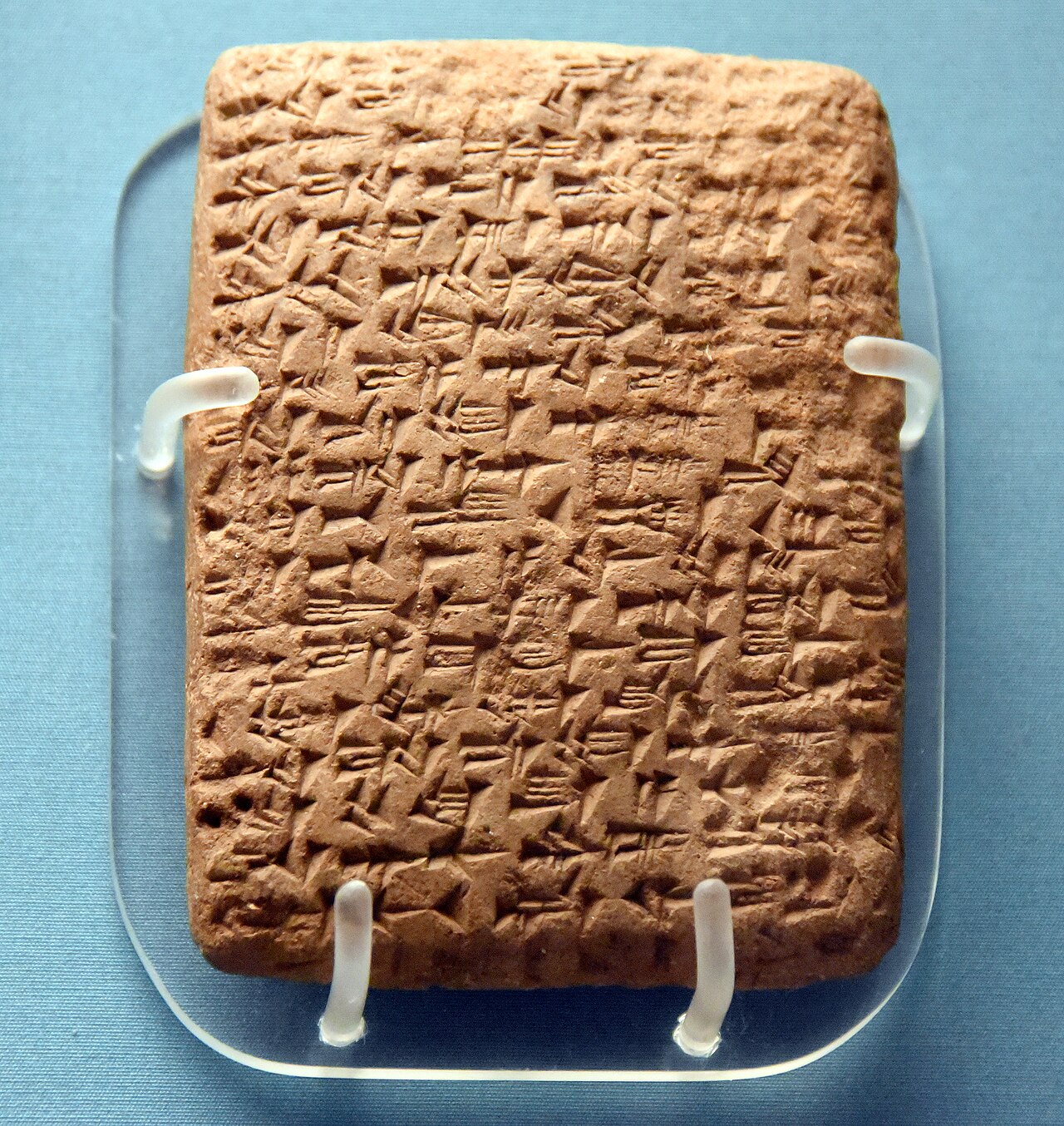
For nearly three millennia after his death, Akhenaten was effectively erased from the historical record. His monuments were dismantled and hidden, his statues destroyed, and his name excluded from the lists of rulers that later pharaohs compiled. It was not until the late nineteenth century that the site of Amarna—also called Akhetaten, the new capital he had constructed specifically for the worship of Aten—was discovered, pulling the pharaoh back into public awareness. In 1907, Edward R. Ayrton unearthed a mummy from tomb KV55 in the Valley of the Kings that could potentially be Akhenaten's. Later genetic testing confirmed that the man buried there was Tutankhamun's father, yet his identification as Akhenaten has since been questioned. Flinders Petrie's early excavations at Amarna further ignited public curiosity, and the pharaoh's story, long buried, became one of the most debated narratives in Egyptology.
A Pharaoh of Endless Contradiction
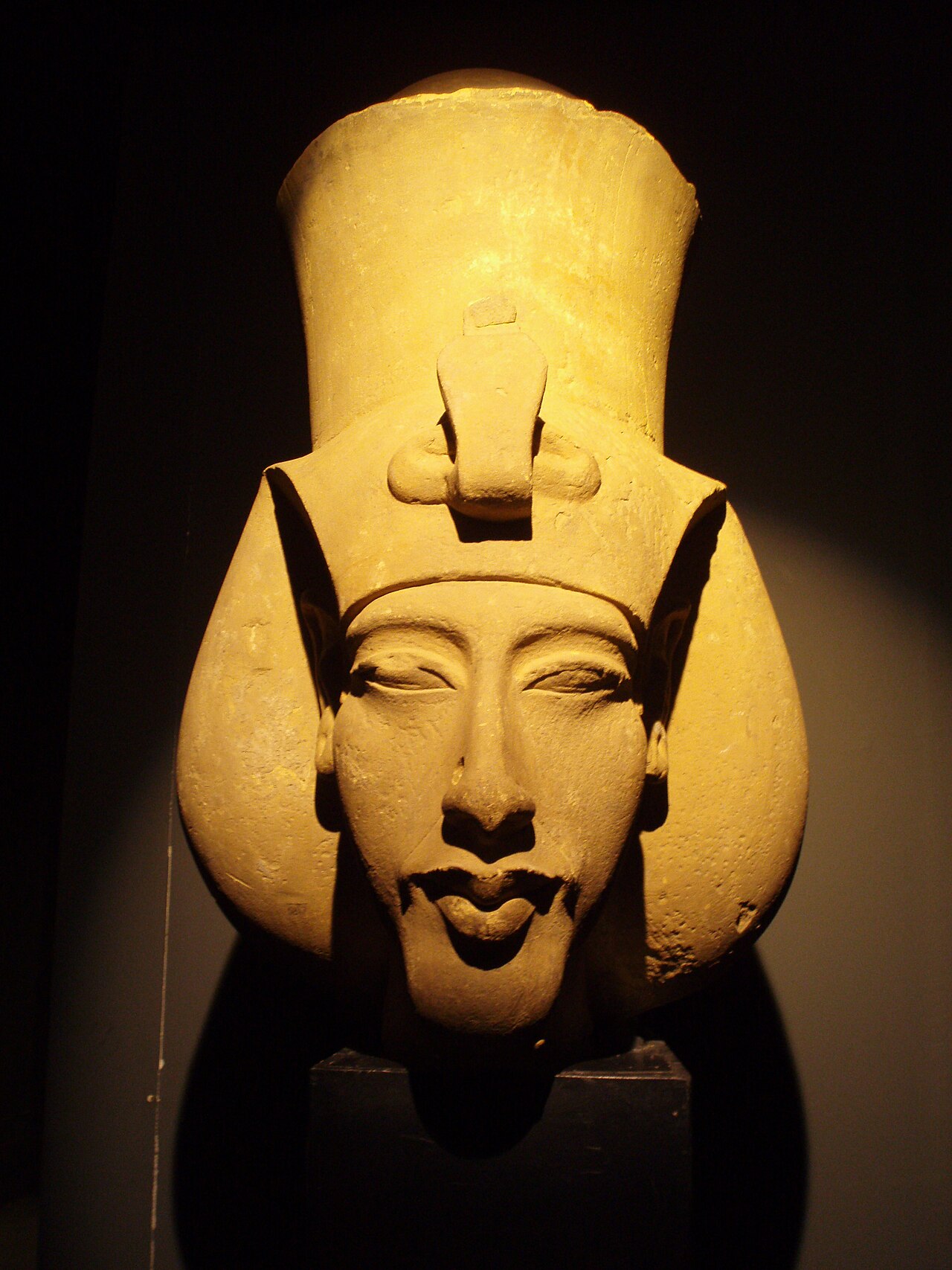
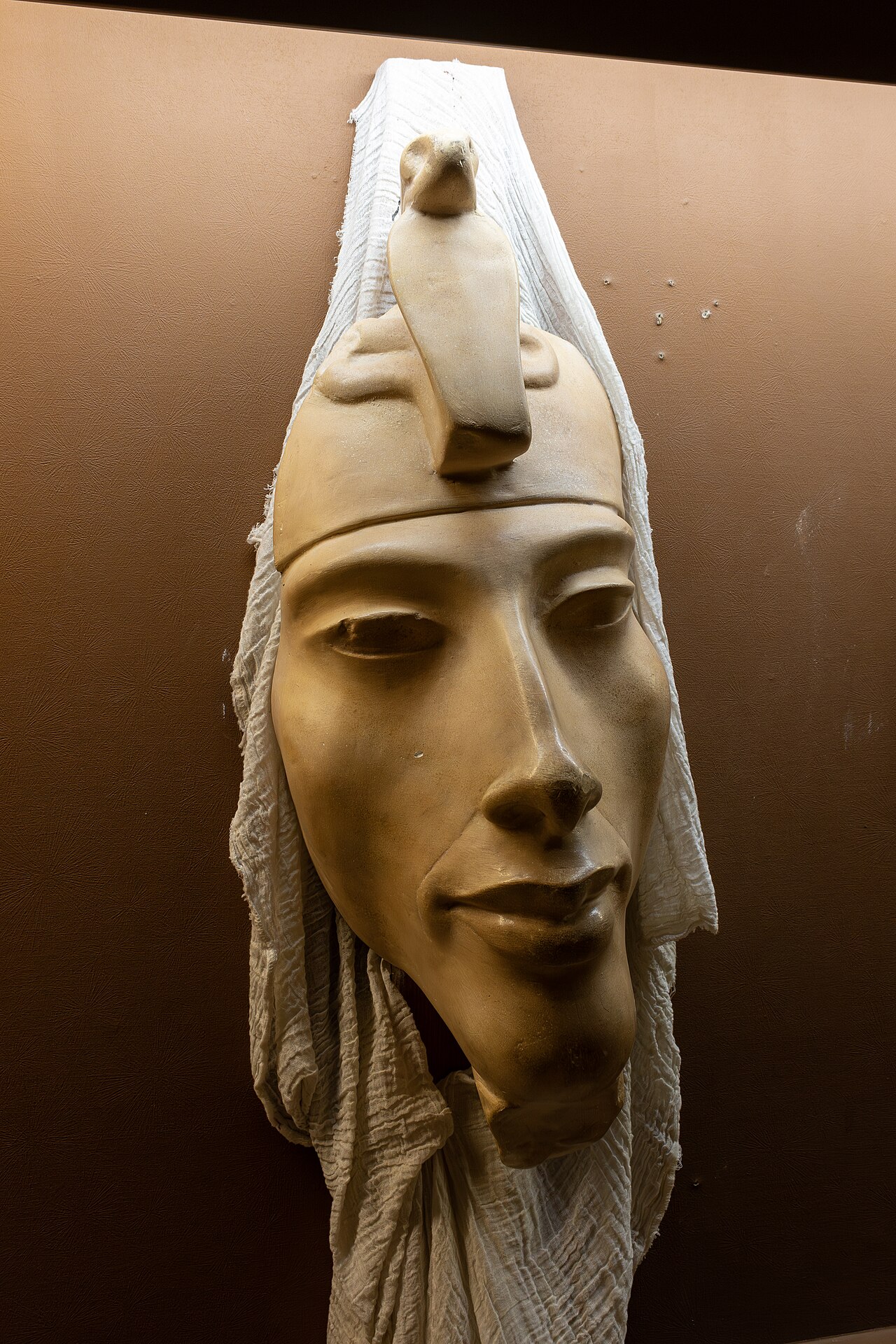
Akhenaten occupies a uniquely polarized place in both scholarly and popular imagination. He has been called 'enigmatic,' 'mysterious,' and 'revolutionary,' hailed as 'the greatest idealist of the world' and 'the first individual in history.' Yet the same figure is simultaneously labeled a 'heretic,' a 'fanatic,' 'possibly insane,' and 'mad.' This duality stems from the sheer scale of what he attempted: uprooting a civilization's religious foundations and replacing them with a single-deity worship that many see as a precursor to later monotheistic traditions. His patronage of the arts produced a pictorial style of distinctive quality and originality that set his era apart from conventional Egyptian representation. The pharaoh's enduring fascination is also sustained by his connection to Tutankhamun, whose own story is inseparable from Akhenaten's. Whether viewed as visionary or madman, the tenth ruler of the Eighteenth Dynasty remains a figure who refuses to be reduced to a single interpretation.
Gallery
More in Royalty And Heads Of State 1-24
Elsewhere in the Royalty And Heads Of State universe
Spotted an error? Know more?
This is a living reference — every entry is fact-audited, and reader corrections feed straight into our audit queue. Suggest an edit · See this site's audit record