John Major
British prime minister who succeeded Margaret Thatcher.

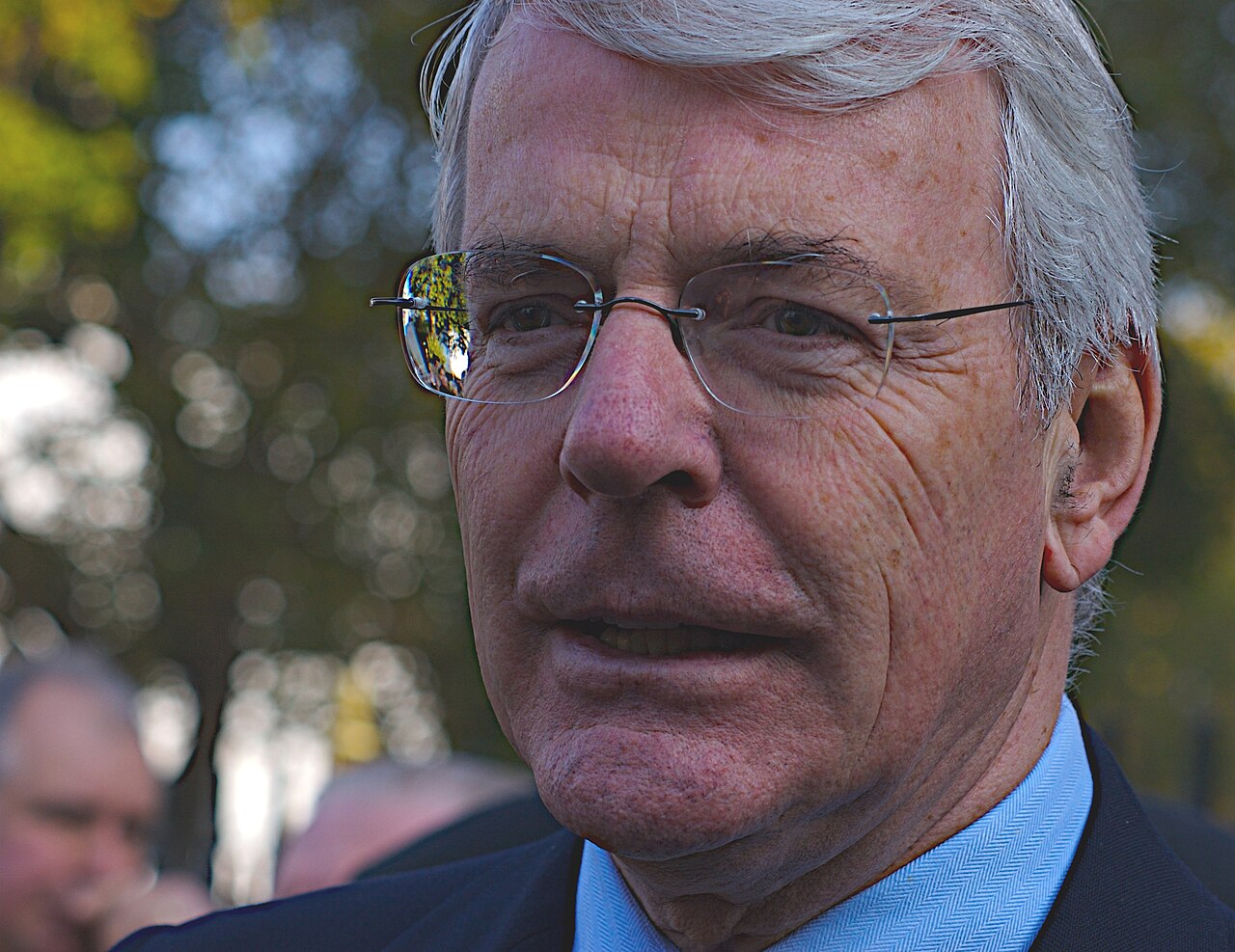
Flickr user Steve Punter · CC BY 2.0
John Major (born 29 March 1943) is a British statesman who served as Prime Minister of the United Kingdom and Leader of the Conservative Party from 1990 to 1997. He previously held various Cabinet positions under Margaret Thatcher, including Foreign Secretary and Chancellor of the Exchequer. Major led the UK through the Gulf War, the Maastricht Treaty negotiations, and the early 1990s economic crisis, and his government won the highest popular vote in British history in 1992.
- born
- 29 March 1943
- field
- Politics
- nationality
- British
- known_for
- Prime Minister of the United Kingdom (1990–1997), Black Wednesday, Maastricht Treaty, Northern Ireland peace process
Lore & Background
John Major was born in St Helier, Surrey, to a former music hall performer and a librarian. He left school before 16 with three O-levels, worked as an insurance clerk, and joined the Young Conservatives in 1959. He was elected to Lambeth London Borough Council in 1968 and to Parliament in 1979. Major held junior government posts under Thatcher from 1984, then served as Chief Secretary to the Treasury, Foreign Secretary, and Chancellor before winning the 1990 Conservative leadership election after Thatcher's resignation.
As prime minister, Major created the Citizen's Charter, replaced the Poll Tax with the Council Tax, committed troops to the Gulf War, negotiated the Maastricht Treaty, and withdrew the pound from the European Exchange Rate Mechanism on Black Wednesday. He promoted the Back to Basics campaign, privatised railways and coal, and played a pivotal role in Northern Ireland peace. In 1995 he resigned as party leader amid internal divisions but won the subsequent leadership election. His government lost its majority and was defeated by Labour in the 1997 landslide.
Reader's Guide
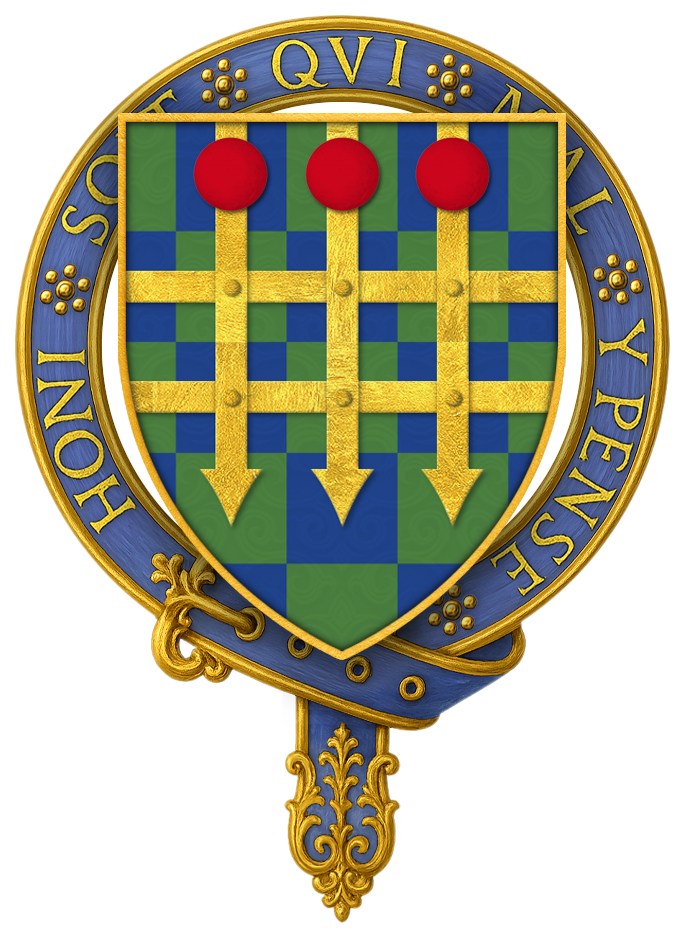
John Major's premiership is historically viewed as average, though public favourability has improved since he left office. He led the Conservatives to a fourth consecutive victory in 1992, winning over 14 million votes—the highest ever for a British party—but his government was plagued by internal divisions over Europe, parliamentary scandals, and economic credibility issues. Black Wednesday in 1992 severely damaged his economic reputation. Major's moderate, mild-mannered style contrasted sharply with Margaret Thatcher's, and his efforts on the Northern Ireland peace process earned him a Companion of Honour. After leaving office, he focused on writing, business, sporting, and charity work, and has occasionally intervened in politics, notably supporting the UK remaining in the European Union and criticising Brexit. He was appointed a Knight Companion of the Garter in 2005.
Did You Know?
- John Major left school just before his 16th birthday with only three O-level passes.
- He was unemployed for much of the latter half of 1962, a period he described as 'degrading'.
- Major's birth required several blood transfusions due to an infection, causing permanent scarring to his ankles.
- He was the oldest living former British prime minister after Margaret Thatcher's death in 2013.
The Parliamentary Standard Model
In the constitutional architecture of the United Kingdom, the office that John Major occupied as head of government sits within what scholars classify as the parliamentary standard model. Under this framework, the head of state theoretically holds key executive powers, yet those powers are exercised only on the binding advice of the head of government. The United Kingdom is explicitly cited alongside India and Germany as a canonical example of this arrangement. This means that the sovereign's formal authority is real in constitutional terms but is channeled through and dependent upon the political leadership of the prime ministerial office. The separation is not one of substance but of mechanism: the monarch acts, but acts on ministerial counsel. For a prime minister operating within this structure, the practical locus of executive decision-making rests squarely with the government, while the crown provides the ceremonial and constitutional anchor that legitimizes the exercise of state power.
Contrasting Systems of Executive Power
The political landscape in which a British prime minister operates is sharply distinct from the arrangements found in presidential and semi-presidential republics. In presidential systems such as those of the United States, Indonesia, or South Korea, the head of state simultaneously serves as head of government and wields all executive authority without the intermediary layer of ministerial advice. In semi-presidential systems like France, two leaders officially share executive power, and the practical balance between them shifts depending on which figure commands greater public confidence. The United Kingdom, by contrast, belongs to the parliamentary family where the head of state's powers are exercised on the binding advice of the government. This structural difference means that a British prime minister derives authority from parliamentary confidence rather than from a direct popular mandate to the executive office itself, a distinction that shapes the entire political culture surrounding the role.
The Symbolic and Ceremonial Dimension
While the United Kingdom's standard model grants the head of state theoretical executive powers, other parliamentary systems push the ceremonial role to its logical extreme. In Sweden, Japan, and Israel, the head of state holds none or very limited executive authority, functioning primarily as a symbolic and ceremonial figure. The Japanese constitution, drafted under Allied occupation after the Second World War, explicitly vests all executive power in the cabinet chaired by the prime minister, reducing the emperor to a largely representative role. This spectrum—from the UK's standard model to Japan's non-executive model—illustrates the range of possibilities within parliamentary governance. Former French president Charles de Gaulle, while shaping the 1958 constitution, articulated a different philosophy: the head of state should embody what he called the spirit of the nation. Whether one views the office as a constitutional mechanism or a national symbol, the underlying question of how much substantive power the role carries remains central to understanding any head of government's operating environment.
Sub-National and Federal Parallels
The concept of a head of state does not stop at the level of the sovereign nation. In federal arrangements and dependent territories, the same representational role is replicated at lower levels of governance, creating a parallel structure that mirrors the national model. In each Canadian province, the lieutenant governor fulfills the head-of-state function; in most British Overseas Territories, the governor performs equivalent duties. Australian states and Indian states follow similar patterns. Hong Kong's Basic Law designates the chief executive as head of the special administrative region while simultaneously serving as head of government, a dual role that has no exact counterpart in the UK's unitary structure. In Germany, however, the non-sovereign federal constituents lack a clearly defined post analogous to a head of state, with the speakers of the Landtags performing many of the same duties without an explicit constitutional basis. These variations remind us that the relationship between statehood, representation, and executive authority is far more complex than a single national model can capture.
Gallery
More in Royalty And Heads Of State 1-24
Elsewhere in the Royalty And Heads Of State universe
Spotted an error? Know more?
This is a living reference — every entry is fact-audited, and reader corrections feed straight into our audit queue. Suggest an edit · See this site's audit record